
**You cannot build compliance on top of broken IT processes. I have watched organizations try. It never ends well. ** Here is what I keep seeing.
A company decides it needs NIS2 compliance. Or DORA. Or ISO 27001 certification. The board signs off on the budget. A security team gets hired. Consultants arrive. And within three months, the whole thing stalls.
Not because the security strategy was wrong. Because nobody can tell you what servers are running in production. Because change management means "someone sends an email." Because there is no functioning service desk, no asset inventory, and project delivery runs on spreadsheets and good intentions.
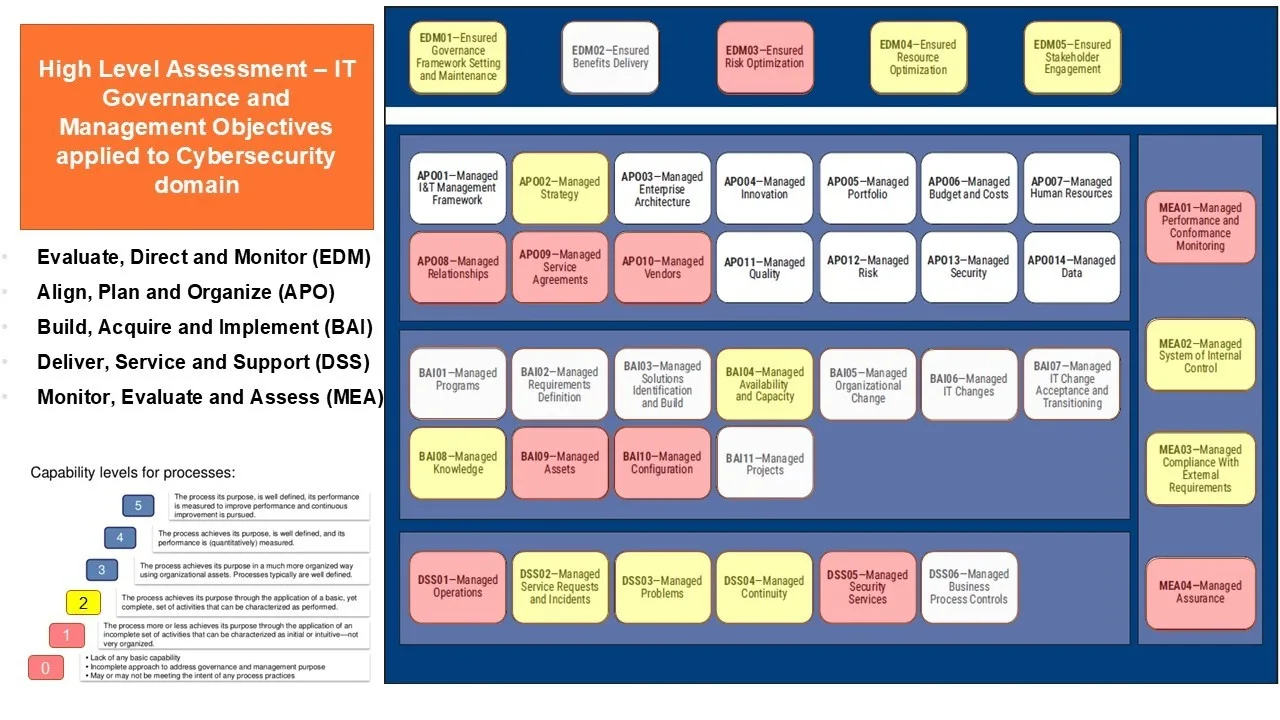
You cannot implement access control if you do not know what assets you have. Without an accurate CMDB, your ISO 27001 asset inventory is fiction. Your NIS2 risk assessment is guesswork. Your DORA ICT asset register is incomplete before you start. COBIT and ITIL both treat configuration and asset management as foundational. Skip it, and everything built on top is unreliable.
You cannot enforce security changes if changes are not managed. When I audit organizations that failed their ISO 27001 certification, the root cause is almost never a missing security policy. It is that changes go live without approval, without documentation, without anyone knowing what was modified. ITIL 4 and COBIT both require a structured change process for exactly this reason.
You cannot deliver a security program if projects are not governed. Whether you follow PRINCE2, PMBOK, Scrum, or SAFe does not matter. What matters is that you have stage gates, resource management, and accountability. I have seen six-figure security investments collapse because the organization had no project governance at all. The CISO had a strategy but no delivery mechanism to execute it.
You cannot respond to incidents if your service management is broken. ITIL 4's incident and problem management practices are not optional extras. NIS2 Article 23 requires incident reporting within 24 hours. If your IT team cannot triage a service ticket reliably, how will they handle a security breach under regulatory scrutiny?
This is the uncomfortable truth. COBIT 2019 maps 40 management objectives across five domains. ITIL 4 defines 34 practices. PRINCE2 and PMBOK structure how you deliver. Scrum and SAFe drive agility. But none of that matters if the basics are missing.
Maturity is sequential, not parallel. You crawl before you walk.
Before you spend another euro on cybersecurity tools, ask yourself one question: can my IT department reliably manage changes, assets, projects, and incidents today?
If the answer is no, that is where your compliance budget should go first. What is the most common IT process gap you have seen blocking security initiatives?